



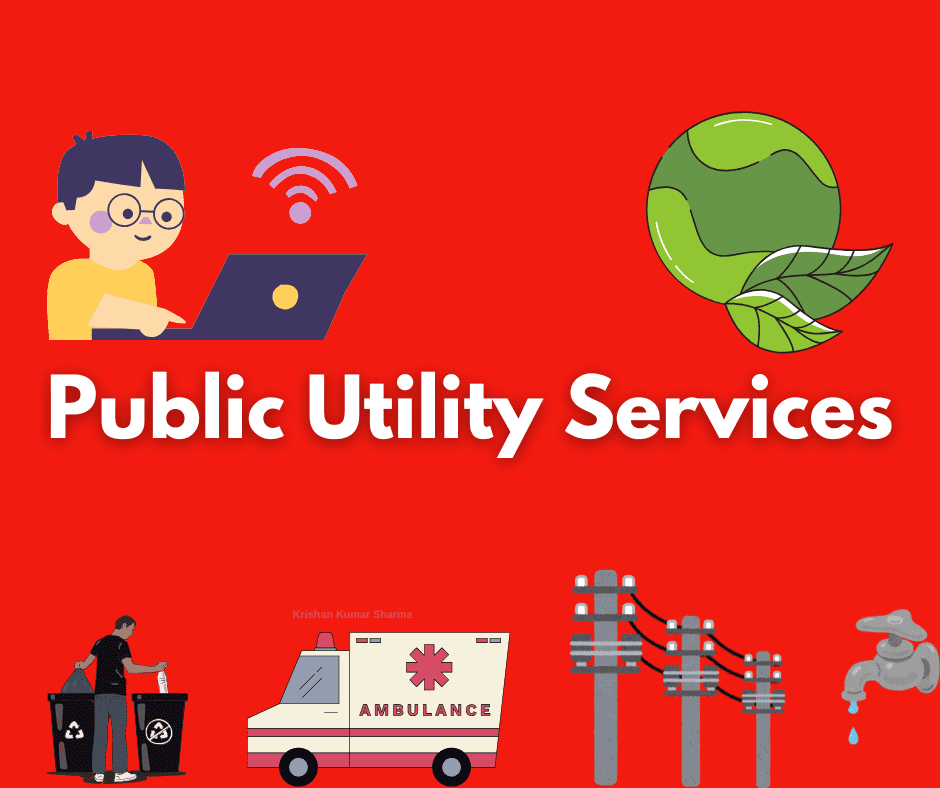
Before starting this we need to understand about public utility service, so let us understand it into a defination:
Public utility service are provided by a company, government or state, such as telecommunications, electricity and gas supply, or train networks, etc.
We think this definition is not sufficient to understand it. Let us understand this a little better, the concept of public utility service stands as the cornerstone of social infrastructure in the modern era. From clean water, portable internet and electricity to ensuring efficient waste management and transportation systems, these services are essential to a portable waste management and transportation system. As our society evolves, our approach towards public utility service should also evolve.
Understanding Public Utility Service
Public utility service include a wide range of essential facilities provided by governments or private entities to the general public. These services generally include water supply, electricity, natural gas, transportation, waste management, telecommunications and more. Public utility service are fundamental to meeting the basic needs of every individual and enabling economic activities to flourish.
The Importance of Public Utility Service
Quality of Life: Access to reliable utilities directly impacts the quality of life within a society. Clean water, Internet, telecommunications, safe electricity and efficient transportation contribute to improved health, well-being and productivity among residents.
Economic development: Strong utility infrastructure attracts businesses and investment, promoting economic growth and job creation. Industries rely on stable utilities to operate smoothly, leading to innovation and prosperity, so strong public utilities are essential for the economy to grow.
Environment: Management of public utilities promotes conservation of natural resources and reduces environmental impacts.
Social Integration: Affordability and availability of public utility service to all promotes inclusivity and cohesion within the society.
Challenges Facing Public Utility Service
Despite their significance, public utility service encounter various challenges that hinder their effectiveness:
- Aging Infrastructure: Many utility systems worldwide are outdated and in need of modernization. Aging infrastructure leads to inefficiencies, frequent breakdowns, and increased maintenance costs.
- Resource Scarcity: Growing populations and urbanization strain finite resources such as water and energy. Sustainable management practices are essential to address resource scarcity and ensure long-term viability.
- Technological Advancements: Rapid technological advancements necessitate continuous adaptation and investment in utility systems. Smart grids, IoT-enabled sensors, and data analytics offer opportunities for optimization but require substantial capital and expertise.
- Climate Change: The increasing frequency of extreme weather events poses challenges to utility resilience and infrastructure resilience. Climate-resilient design and disaster preparedness are essential for mitigating risks and ensuring uninterrupted service delivery.
Strategies for Enhancing Public Utility Service
To overcome these challenges and enhance public utility service, concerted efforts are required from governments, private entities, and communities:
- Investment and Modernization: Prioritize investment in upgrading and modernizing utility infrastructure to improve reliability, efficiency, and sustainability.
- Innovation and Technology Adoption: Embrace emerging technologies such as renewable energy, IoT, and AI to optimize operations, enhance resilience, and reduce environmental impact.
- Collaboration and Partnerships: Foster collaboration between government agencies, private sector stakeholders, and community organizations to leverage expertise, resources, and funding.
- Education and Awareness: Promote public awareness and education campaigns to encourage conservation, responsible consumption, and participation in utility conservation programs.
- Policy and Regulation: Implement supportive policies and regulations that incentivize sustainable practices, ensure affordability, and safeguard consumer interests.
Conclusion
Public utility service are the backbone of modern society, facilitating economic prosperity, social well-being, and environmental sustainability. Enhancing these services requires a multifaceted approach encompassing investment, innovation, collaboration, and policy reform. By prioritizing the modernization and sustainability of utility infrastructure, we can build resilient communities and pave the way for a brighter future for all.
See This Also: 12 Ways to Optimize Blog Posts for Voice Search